Table Of Contents
Is SaaS link building still worth it in 2026? Yes. But not in the way most companies still approach it.
A few years ago, SaaS SEO was heavily focused on scaling backlinks, chasing DR metrics, and publishing huge volumes of content. Today, Google is significantly better at recognizing artificial backlink patterns, low quality guest post networks, AI-generated spam sites, and irrelevant placements built only for SEO.
At the same time, software discovery is changing fast.
People are no longer finding SaaS products only through Google search. They are increasingly discovering tools through ChatGPT, Perplexity, Google AI Overviews, Reddit, newsletters, YouTube, software comparison pages, and “best tools” listicles.
That changes what authority looks like online.
The SaaS companies growing fastest today are usually not the ones building the highest number of backlinks. They are the ones consistently appearing across the places where buyers already search for recommendations, compare products, and discover new tools.
Why SaaS Companies Still Invest in Link Building
In SaaS SEO, being the better product does not automatically make you the most visible one.
Most software categories are already saturated with well-optimized companies publishing the same type of content, targeting the same keywords, and following similar SEO playbooks.
That is why even established SaaS companies continue investing in link building and regularly work with a SaaS link building agency to improve their authority, strengthen rankings, and stay competitive in search results.
Link Building Is Still a Revenue Catalyst
In competitive SaaS niches, backlinks often decide which company gets discovered first.
The main purpose of SaaS link building is simple: helping your brand appear in front of potential buyers before competitors do.
When multiple SaaS companies target the same keywords with similar quality content, the brands with stronger backlink profiles and broader industry presence usually end up capturing more rankings, clicks, and buyer attention over time.
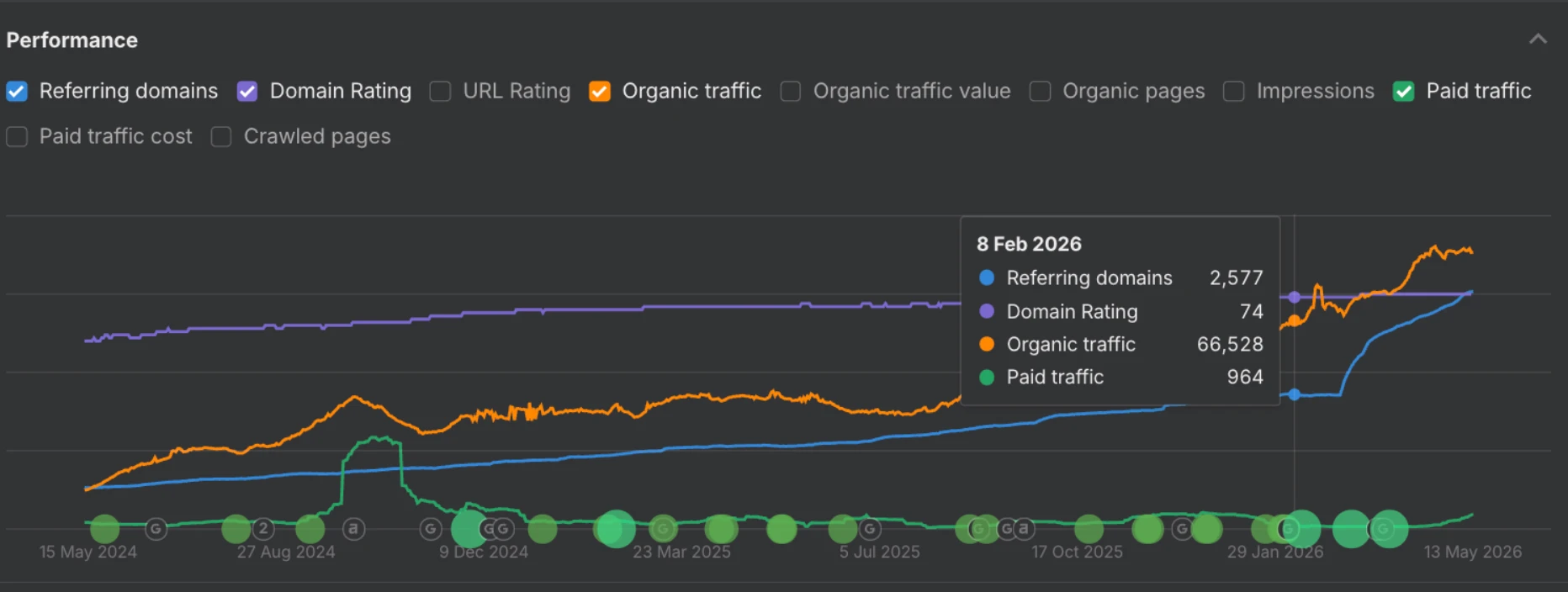
The graph from Ahrefs shows how consistent acquisition of referring domains correlates with long-term organic traffic growth, demonstrating the compounding effect of SaaS link building over time.
SEO Still Compounds Better Than Paid Ads
Paid ads stop the moment budgets stop.
SEO compounds over time. A strong article or landing page can keep generating qualified traffic and signups long after it was published.
But in competitive SaaS niches, most companies already have decent content and technical SEO. This is usually where link building becomes the differentiator.
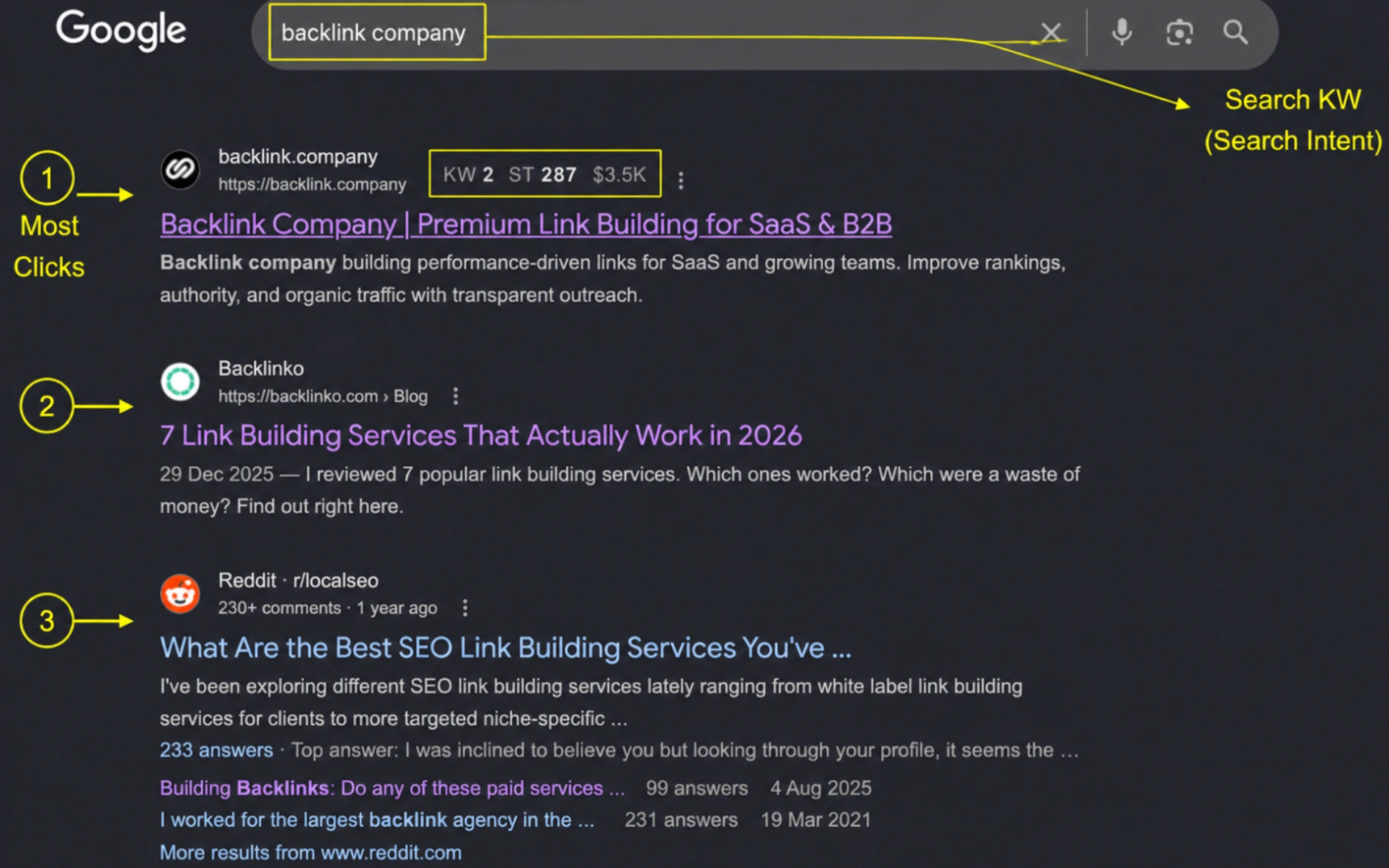
From the screenshot above, you can see our company Backlink ranking in the #1 position for the keyword “backlink company,” capturing the highest visibility and most clicks directly from search intent. According to Ahrefs, buying the same visibility through Google Ads would cost around $3,500 in estimated traffic value (only 287), without any guarantee of getting a client. This is where link building matters.
Expert insight: "Many SaaS revenue keywords already cost $10–$20+ per click in Google Ads. Imagine paying for 1,000 clicks and spending $10,000–$20,000 without even guaranteeing a single customer.
Backlinks are an investment too, but the difference is that strong organic rankings can keep generating traffic and leads long after the placement is live. The long term compounding effect is usually much stronger."
Why SaaS Link Building Is Different
SaaS Is One of the Most Competitive SEO Niches
SaaS SEO is significantly more competitive than most industries.
Because SaaS products can scale globally, companies from all over the world compete for the same search visibility.
This is why organic SEO traffic matters so much in SaaS.
You are not competing against small local businesses. You are competing against companies with mature SEO teams, strong brand presence, and years of accumulated backlinks.
A project management SaaS is not only competing with other tools. It is competing with brands like Asana or Notion already mentioned across:
software listicles
industry blogs
workflow guides
integration pages
trusted publications
Relevance Matters More in SaaS
In lower competition industries, almost any decent backlink can improve rankings.
SaaS is different.
Google looks much more closely at topical fit and industry connection. Understanding how to get relevant backlinks has become one of the biggest ranking advantages in modern SaaS SEO.
A mention on a respected SaaS or technology website will usually create far more impact than dozens of random backlinks from unrelated blogs.
That does not mean every backlink needs to come from your exact niche. In many cases, being connected to the broader software, automation, productivity, or business technology space already creates strong alignment.
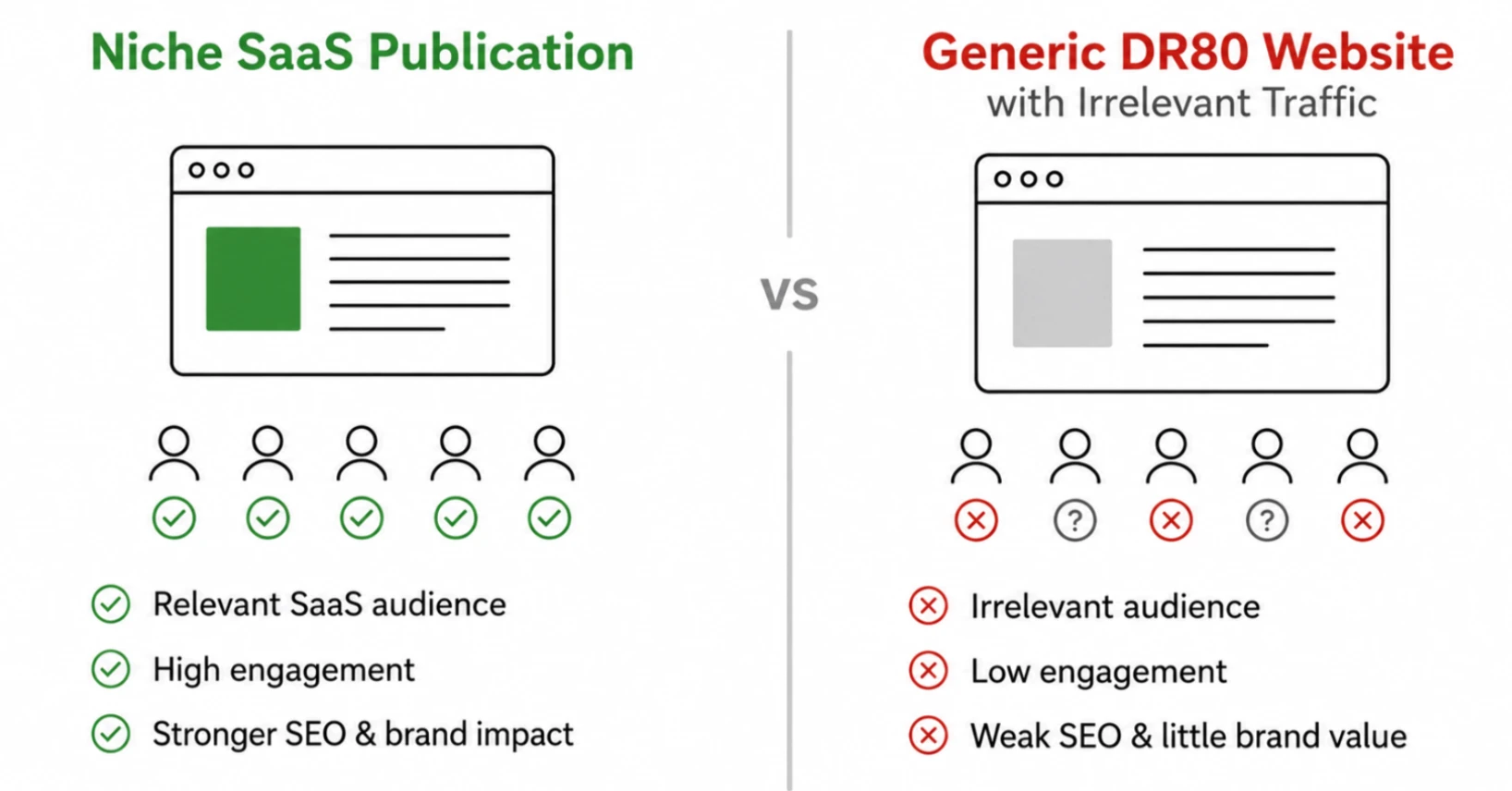
One SaaS company we worked with had already built many of DR70+ backlinks but still struggled to improve rankings for commercial keywords. Most of the placements came from generic marketing blogs with weak topical connection to the product.
After shifting toward fewer but more targeted placements on SaaS and operations-focused websites, rankings started improving within a few months even with significantly lower link volume.
The strongest SaaS backlink profiles usually feel closely connected to the same market and buyer journey instead of being scattered across random industries.
How AI Search Changes SaaS Link Building
Most SaaS SEO strategies are still built almost entirely around Google rankings.
And to be clear, Google still matters most.
But AI search is growing extremely fast, and search behavior is clearly starting to shift.
People are increasingly discovering software through:
ChatGPT
Google AI Overviews
Perplexity
Reddit
YouTube
software comparison sites
That changes how brands get discovered online.
Traditional SEO focused heavily on backlinks as ranking signals.
AI search is different.
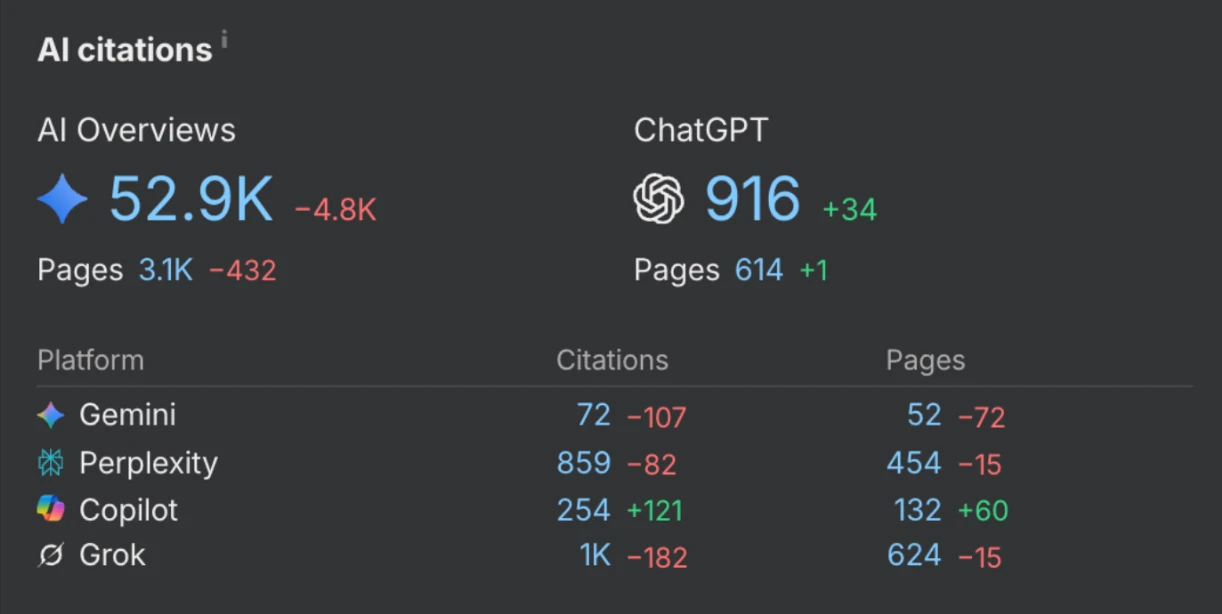
AI systems increasingly look at which brands consistently appear around a topic. Which tools are repeatedly recommended together. Which companies show up across discussions, reviews, comparison pages, and industry content.
This is also part of SaaS link building. It is not only about getting backlinks, but also about having the ability to place and edit your brand inside existing industry content across SaaS websites.
That is why some SaaS brands appear surprisingly often inside AI-generated recommendations even without having the biggest backlink profiles.
A SaaS company mentioned across trusted blogs, software listicles, communities, integrations, podcasts, and newsletters usually builds much stronger market recognition than a company buying hundreds of disconnected backlinks from random websites.
Many SaaS companies are still behind here.
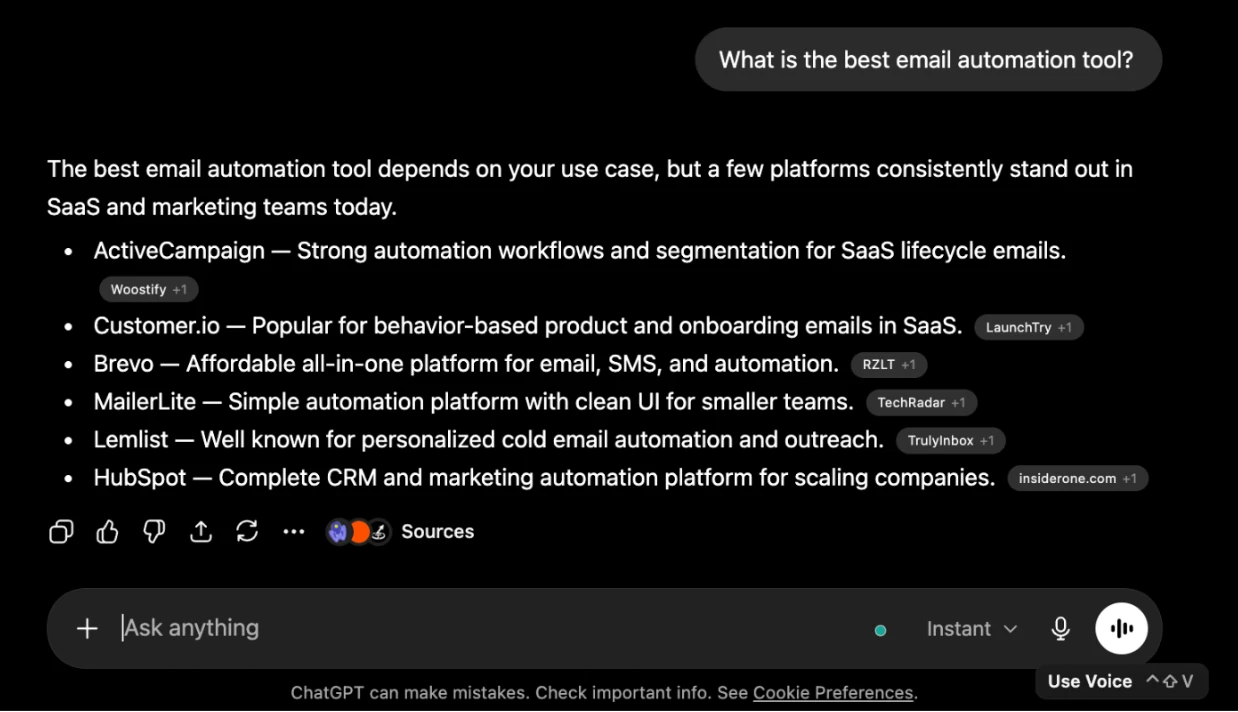
That is why modern SaaS link building is not only about getting backlinks, but also about building consistent visibility inside your niche.
What Makes a High Quality SaaS Backlink?
The best SaaS backlinks usually come from websites with strong authority, real search traffic, and clear connection to your industry. The placement should feel natural inside high quality content, not artificially inserted just for SEO.
A strong SaaS backlink is not defined by DR alone, but high DR websites still matter because they often carry stronger trust, aged authority, and better ranking potential. But those signals become much more powerful when the website is also closely related to your industry.
For example, a mention inside a respected 40DR SaaS comparison article will usually create more SEO impact than a random DR80 website publishing sponsored posts across unrelated topics.
Relevance Changes Everything
In SaaS SEO, where the backlink comes from matters almost as much as the backlink itself.
That does not mean every backlink needs to come from your exact micro-niche. In many cases, being part of the broader SaaS and technology space already creates strong topical alignment.
That surrounding context helps search engines better understand what category your product belongs in and which topics your brand should be associated with.
For example, a CRM software company can still benefit from mentions on productivity, operations, automation, startup, or workflow-focused websites because the audiences and topics naturally overlap.
The Best Backlinks Feel Natural
Many low quality backlinks fail because they look forced.
The strongest placements feel useful to the reader first and promotional second. They fit naturally into the article instead of interrupting it.
This is why contextual backlinks inside articles, listicles, and industry resources often outperform generic guest posts published only for SEO.
Strong Links Build More Than Rankings
Good SaaS backlinks influence much more than keyword positions and AI Search.
They also help with:
brand trust
buyer discovery
category positioning
branded searches
The goal is no longer just collecting links. It is becoming recognized in the right places.
Insight:
"One of the biggest mistakes in SaaS SEO is treating DR like Google’s version of authority. DR is only a third-party metric created by Ahrefs. It can help estimate the strength of a website, but Google does not use it directly."
How to Start: Your 2026 SaaS Link Building Roadmap
One of the biggest mistakes SaaS companies make is trying to scale link building before building a clear strategy.
A lot of teams immediately chase backlinks without understanding:
where their buyers already discover software
which websites influence their niche
what type of industry presence they actually want to build
That usually leads to random placements with very little long-term impact.
SaaS link building works much better when it is approached strategically from the beginning.
Start With Competitor & Keyword Research
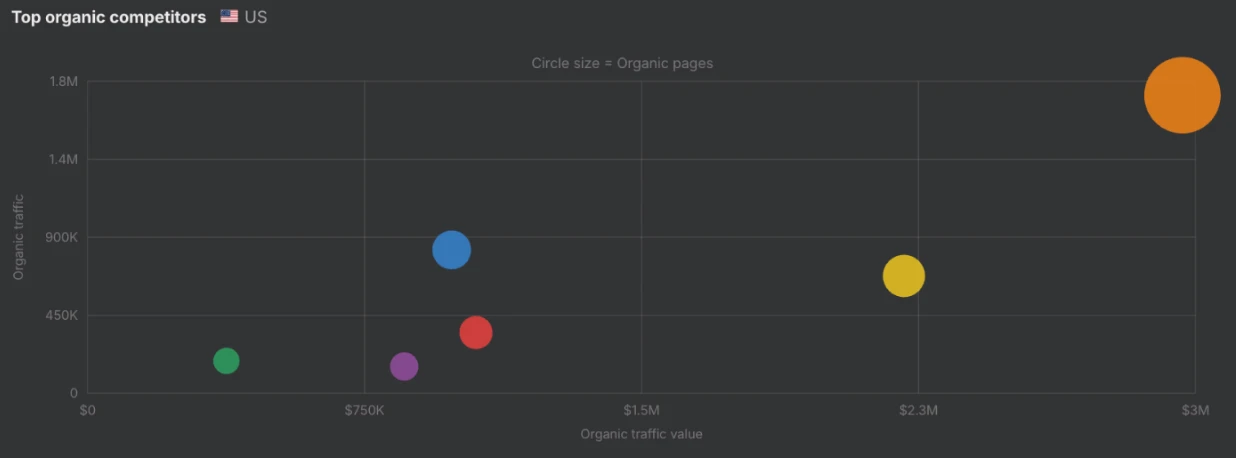
Before building links, first identify who your real organic competitors are.
In SaaS SEO, these are often not only direct product competitors, but also websites consistently ranking for the keywords you want to target.
Analyze:
what pages bring them the most traffic
which keywords they rank for
what type of content performs best
where they are getting backlinks and mentions from
At the same time, keyword research helps uncover which opportunities are actually worth targeting. Some keywords are too competitive, while others may bring little business value.
The goal is finding realistic keyword opportunities, content gaps competitors still do not cover, and pages where stronger authority could realistically improve rankings.
Create Content Worth Building Links To
Google does not rank pages highly just because they have backlinks.
If a page brings little value, feels generic, or says the same thing as every other SaaS article, Google has very little reason to push it above stronger competitors.
Content should also be updated regularly. SaaS products, workflows, and search results change fast, and outdated pages slowly lose relevance over time.
This matters for outreach as well.
SaaS editors are much more willing to place links to pages that genuinely improve their article instead of linking to pages with little value
That is why content quality matters before link building even starts.
A well-optimized SaaS page should have:
clear search intent
strong on-page SEO
useful information
original insights or examples
clean structure and readability (UX and UI design)
content that is genuinely better than low-effort AI fluff
Choose Your Target Pages Carefully
Before starting outreach, first choose 5–10 target pages you actually want to grow.
These should be pages with clear business value, whether that means generating demos, signups, qualified traffic, or increasing brand visibility inside your SaaS category.
Use CRM, analytics, and SEO tools to understand which pages already influence conversions, where they currently rank, and which keywords have the highest potential impact.
Effective SaaS link building strategies are usually focused around a small number of important pages instead of building links randomly without direction.
At the same time, a strong overall backlink profile still helps the entire website. As domain authority grows, other pages can also benefit and rank more easily over time.
In-House vs Agency Support
Some companies build links internally, while others work with specialized SaaS link building agencies.
Building links in-house usually means handling the entire outreach process yourself, finding relevant websites, building relationships, negotiating placements, and continuously searching for domains currently active in link building collaborations.
Working with a specialized SaaS agency is different. Agencies already know the SaaS landscape, maintain existing publisher and editor relationships, and often understand which companies are actively open to partnerships, guest posts, or editorial placements.
Because of this, agencies can usually move faster and scale outreach more efficiently.
In practice, many SaaS companies keep SEO strategy internally while outsourcing outreach and link acquisition to specialized partners.
Our Opinion:
"Random backlink buying usually creates weak SaaS SEO results. In SaaS, the strongest backlinks usually come from websites that are selective about what they link to. If a general website publishes links across every industry, it slowly turns into a link farm and loses credibility in Google’s eyes. The most valuable SaaS placements are often the hardest ones to get." - Zuzana, founder of Backlink
Best SaaS Link Building Strategies in 2026
Most outdated link building strategies fail for one reason:
they create backlinks without building real market trust.
Modern SaaS SEO is less about raw link volume and more about showing up consistently across the websites, publications, and discussions that already influence buying decisions.
The best strategies today combine:
niche relevance
buyer-intent visibility
editorial credibility
brand familiarity
Instead of trying to “build links everywhere,” successful SaaS companies focus on becoming visible where their audience already discovers products and compares solutions.
Editorial Link Insertions
How to Find Valuable Editorial Placements
The best opportunities usually come from pages that:
rank for commercial keywords
cover your niche regularly
maintain strong editorial standards
This is one reason smaller SaaS publications often outperform giant generic websites.
The audience alignment is usually much stronger.
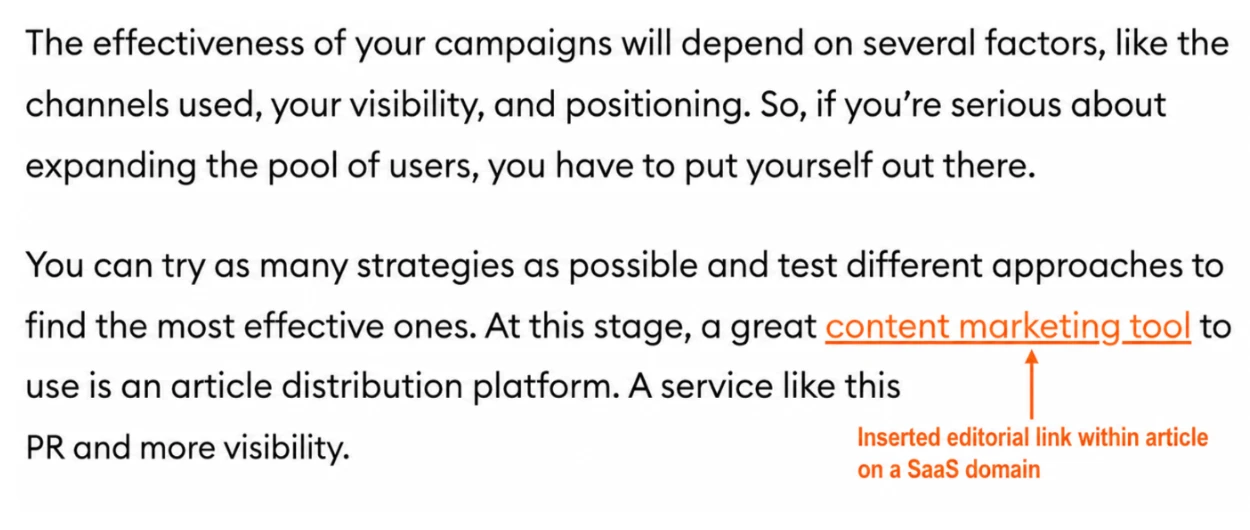
Common Mistakes With Insertions
Many placements fail because they feel forced.
Google has become much better at recognizing paragraphs written mainly to place backlinks instead of genuinely helping readers.
The strongest insertions blend naturally into the article and improve the content around them.
SaaS Listicle Placements
Listicles still heavily influence SaaS buying decisions while also strengthening AI visibility, authority, and recurring brand exposure across your niche.
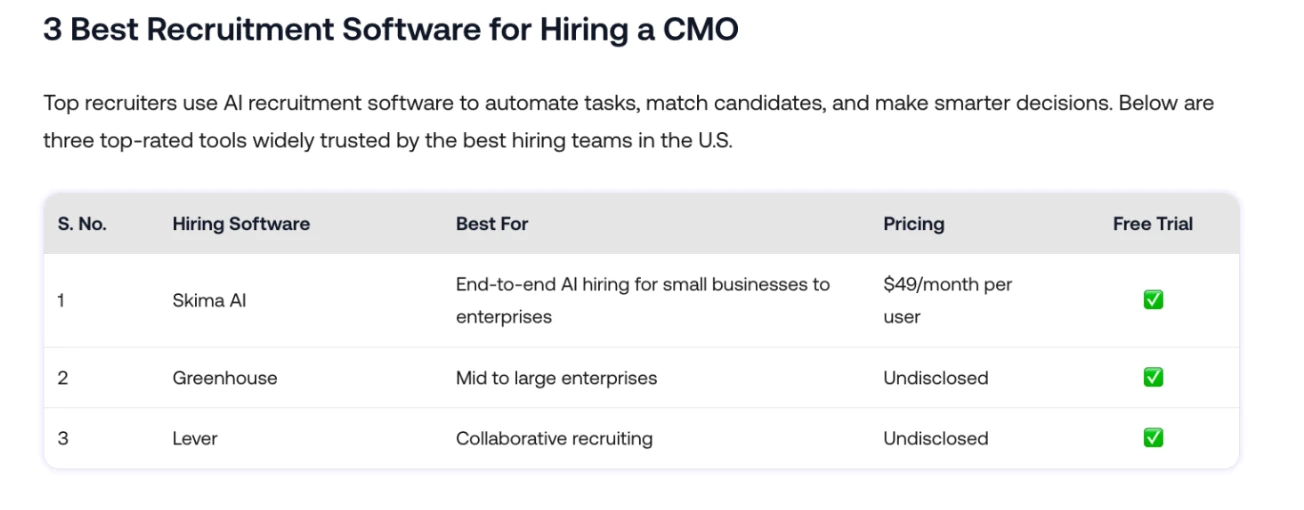
Users searching:
• best project management software
• best AI website builders
• top CRM tools
are often already evaluating products actively.
That makes these pages valuable not only for SEO, but also for:
• conversions
• branded searches
• AI citations
• market positioning
Ranking #3 inside a “Best Applicant Tracking Systems” listicle on a relevant SaaS website often drives far more qualified traffic and brand visibility than dozens of generic guest posts on unrelated websites.
What Makes a Listicle Valuable
The strongest listicles usually:
• rank consistently over time
• attract backlinks naturally
• maintain topical focus
• influence real purchase decisions
Weak listicles are usually easy to spot.
They often exist almost entirely for affiliate monetization and publish low quality comparisons across dozens of unrelated categories.
Brand Mentions & Digital PR
By late 2026, I predict Google will treat 'Branded Search' (people typing your company name into the search bar) as a stronger authority signal than any backlink. Why? Because you can't fake thousands of people looking for your specific brand.
Not every valuable SaaS mention needs to contain a backlink.
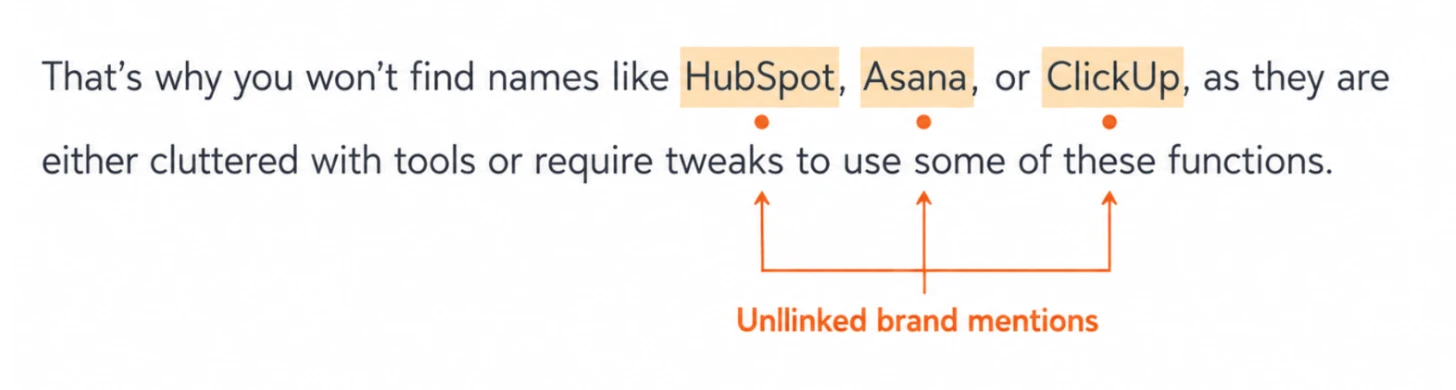
Modern search engines and especially AI-driven systems increasingly pay attention to which brands repeatedly appear across trusted industry sources.
This is one reason some SaaS brands appear disproportionately often inside ChatGPT or Perplexity recommendations despite having smaller backlink profiles than competitors.
People simply encounter those brands more often.
Founder visibility plays a major role here too.
Some of the best SaaS mentions today come from:
podcasts
conference talks
industry opinions
guest appearances
reactive commentary around trends like AI or automation
The companies dominating SaaS SEO today are usually not invisible behind their product pages.
They actively participate in the conversations already shaping their category.
Data Driven Content Campaigns
Most SaaS content repeats existing opinions.
Original data is what actually attracts natural backlinks.
Original data is one of the few things that can still attract natural backlinks at scale because journalists, bloggers, newsletters, and AI systems constantly look for new information to reference.
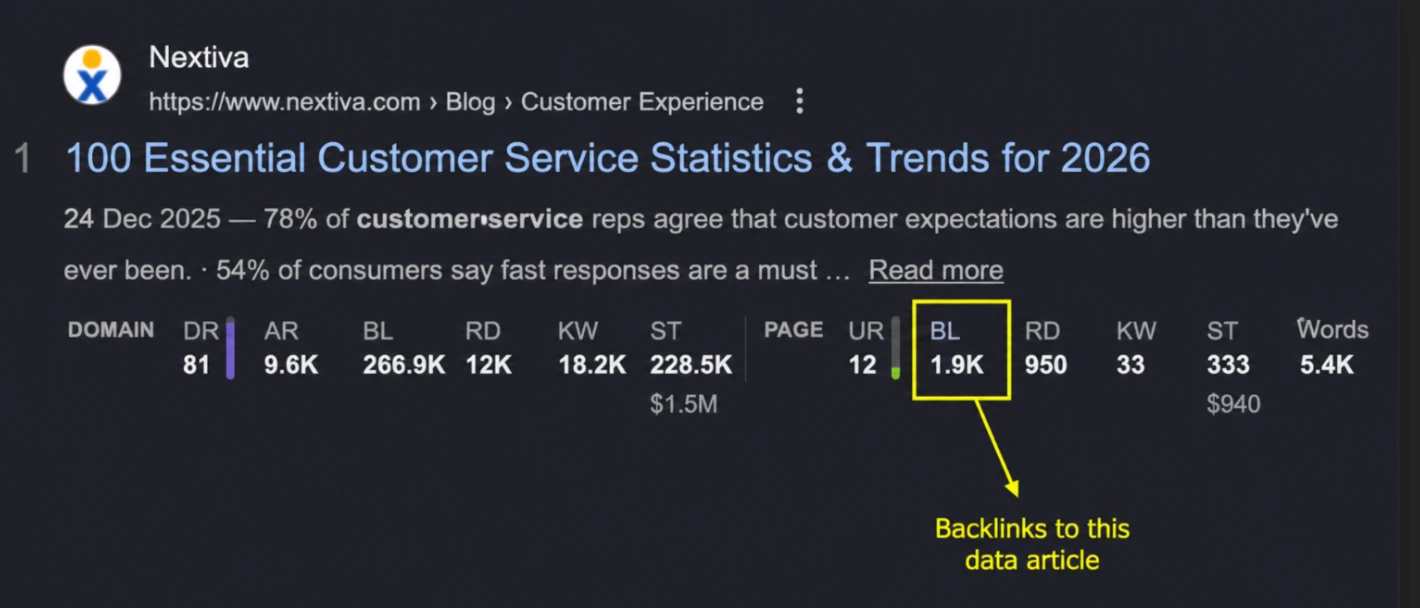
For example, instead of publishing another generic article about CRM benefits, a SaaS company could analyze anonymized onboarding data and discover that automated onboarding reduced average sales cycle length by 14%.
That single insight becomes inherently citeable.
The goal is not creating viral content. The goal is publishing something other websites genuinely want to reference.
At the same time, this strategy usually requires significant time, research, and effort without guaranteed results. Collecting meaningful data, analyzing it properly, and turning it into something genuinely interesting is much harder than publishing standard SEO articles.
What Works Best
Simple data usually outperforms overly complex reports.
Strong examples include:
• benchmark studies
• industry statistics
• industry trends
• productivity insights
• usage pattern analysis
Especially when the findings are practical and easy to quote.
How much SaaS links costs?
2026 SaaS Link Pricing Benchmark:
We reviewed pricing across SaaS link building agencies, publisher networks, and direct placements, and the average cost of a high quality “safe” SaaS backlink in 2026 usually falls between $450–$650.
Placements below roughly $150 are very often low quality, AI-generated websites, or domains with weak topical trust. The strongest SaaS placements are typically more expensive because they come from websites that are selective, difficult to access, and closely connected to real software audiences.
When working with a SaaS link building agency, pricing often also includes:
outreach and negotiations
relationship management
anchor and link optimization
ongoing quality control
replacement support if links disappear later
That is one reason many SaaS companies prefer specialized agencies over one-time backlink marketplaces.
What Google Ignores or Penalizes Today
A surprisingly large percentage of backlinks built today do very little for SaaS SEO.
Some are simply ignored. Others slowly weaken the trust profile of a website over time.
The reason is simple: Google became much better at recognizing manipulated link patterns. A lot of tactics that worked years ago no longer move rankings the same way.
AI Generated Link Spam
AI made it incredibly cheap to create websites at scale.
As a result, the internet is now flooded with “SEO blogs” built almost entirely for sponsored placements. Many look impressive inside Ahrefs because the DR is high, but once you actually check the site, the quality falls apart quickly.
A typical example:
SaaS article today
crypto tomorrow
casino next week
dozens of outbound sponsored links everywhere
These websites usually have no real audience, no clear niche, and no actual influence in the industries they claim to cover.
As a result, getting backlinks from spammy websites can also negatively affect your domain over time.
Low Quality Guest Post Networks
Guest posting itself is not dead.
But giant guest post networks became extremely easy for Google to recognize.
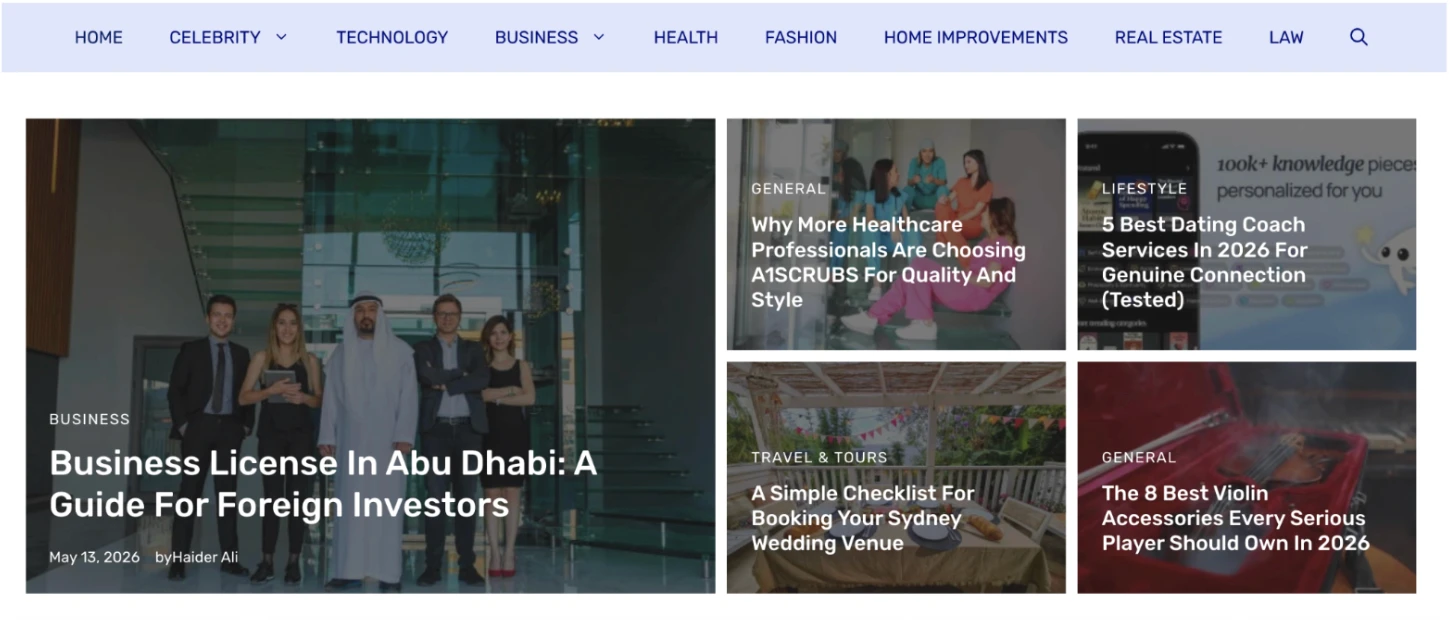
In practice, smaller niche SaaS publications often outperform massive “write for us” websites because they are more selective, more focused, and much harder to get placements on.
That difficulty is usually a good sign.
Our Insight: If a website has a 'Write for Us' page in the footer, Google has already devalued 90% of its outbound links. Real authority comes from sites that are hard to get into.
Over Optimized Anchors & Fake Traffic
Exact match anchor spam is still one of the easiest manipulation signals for Google to detect.
Natural backlink profiles usually contain:
branded anchors
URLs
partial keyword matches
natural mentions inside sentences
not hundreds of identical commercial anchors repeated across random blogs.
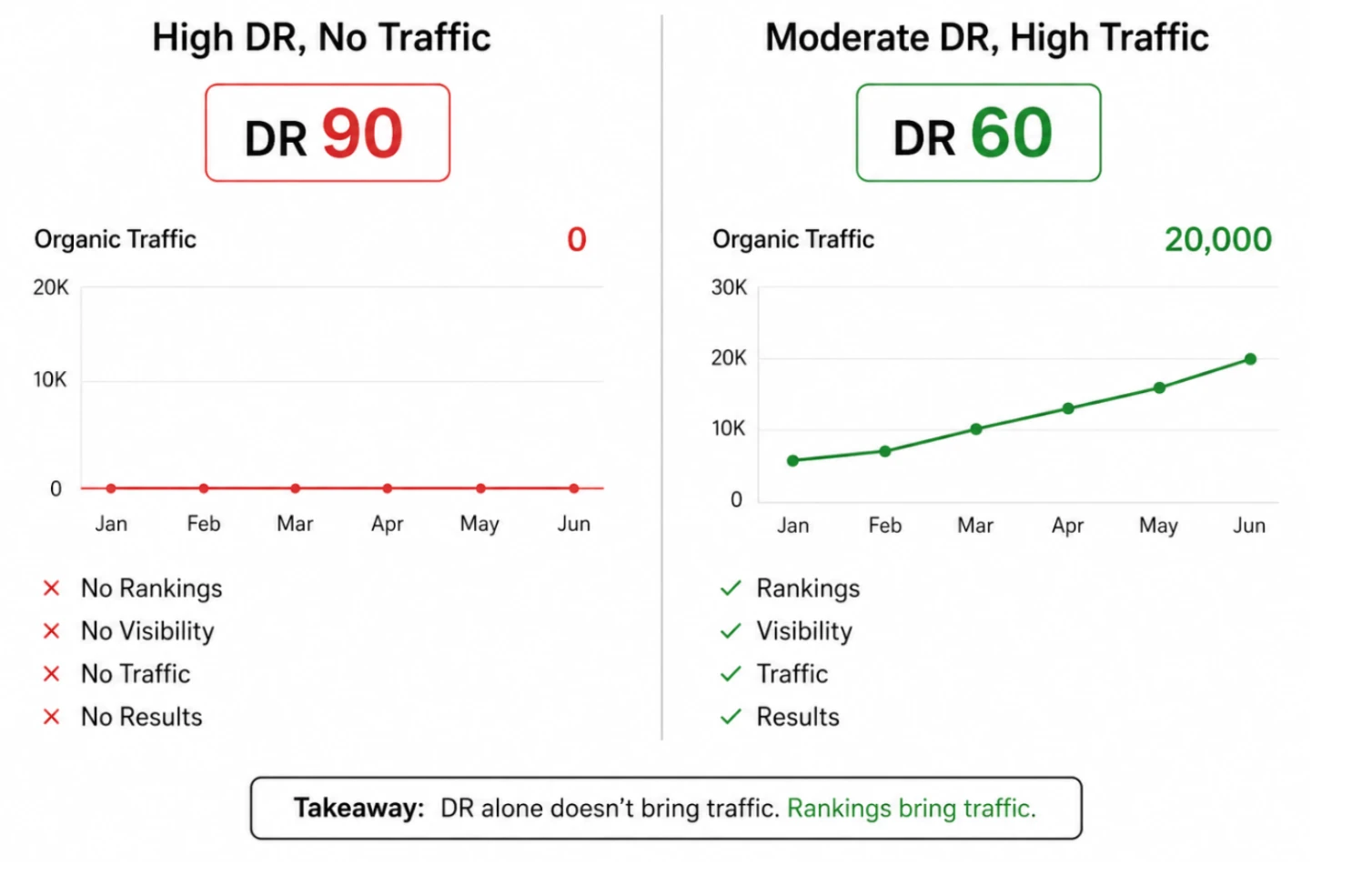
Traffic quality matters too.
Some websites show huge traffic numbers but rank mostly for irrelevant keywords completely unrelated to SaaS. A DR80 website getting traffic from random celebrity or image searches is not necessarily a strong SaaS placement.
High DR still matters. But DR is the most manipulated metric in the industry. In 2026, a DR70 site with no traffic is actually a 'link cemetery'.
Final Thoughts
Modern SaaS link building is no longer about collecting as many backlinks as possible.
Google is becoming much better at understanding which brands are genuinely trusted inside a niche. That is why many outdated link-building tactics are slowly losing effectiveness.
The SaaS companies winning organic search today are usually not the ones building the biggest backlink profiles.
They are the ones consistently visible across the places where their audience already discovers tools, compares products, and looks for recommendations.
And as AI search continues growing, this shift will likely become even more important.
The future of SaaS SEO is moving closer to real brand building:
trusted mentions
strong industry positioning
recurring visibility
relevant placements
recognizable brands
The companies adapting early will have a major advantage across both Google and AI-driven search.
Are high DR backlinks always better?
Not necessarily. A contextual backlink from a smaller but highly relevant industry website can often create more long-term SEO impact than a generic DR90 placement.
Do backlinks still matter in 2026?
Can backlinks from unrelated websites hurt topical relevance?
More Blogs
Read More Articles
